Anxious or overwhelmed
The anxious teen avoiding school, the overwhelmed parent carrying too much, or the new professional who cannot quiet their mind.
Virtual psychotherapy throughout New Jersey
Whether you are seeking support for a struggling teen, wondering if therapy is right for you, looking for practical ways to manage difficult thoughts and feelings, or discouraged because previous therapy did not lead to lasting change, Cognitive Reset offers experienced, thoughtful care.
Our therapists bring years of experience helping people through some of their most difficult moments, including in intensive treatment programs. That work has taught us the value of both practical skills and a strong therapeutic relationship. We help you find ways to manage difficult thoughts and feelings while also exploring what keeps you feeling stuck, so therapy can support you now and help you build changes that last.
Who we help
By the time many people reach us, they have already tried hard to manage on their own. The struggle may look like hopelessness, a sense of defeat, withdrawal, anger, isolation, self-destructive behaviors, strained relationships, low self-worth, recurrent thoughts of death, or the feeling that life has become smaller than it should be.
We will meet you with curiosity, honesty, and respect. Together, we can understand what is keeping you stuck, build on the strengths you already have, and help you begin making changes that feel possible and lasting.
The anxious teen avoiding school, the overwhelmed parent carrying too much, or the new professional who cannot quiet their mind.
The adult who feels alone around others, the young person who has lost confidence or direction, or the partner who no longer feels like themselves.
The first responder still carrying what they have seen, the adult whose childhood affects intimacy, or anyone whose past keeps resurfacing in the present.
The student struggling to meet expectations, the professional nearing burnout, or the family member holding everything together through a major transition.
Collaboration with families and supports
We welcome collaboration with parents, family members, and other important supports. From our years of experience, we have seen that meaningful change can happen not only in therapy, but also at home, at school, and within a person’s closest relationships. When appropriate, and with an adult client’s consent, we may involve family members or other supports to better understand what is happening, discuss practical strategies, and work together toward meaningful change.
Concerns we often work with
How we work
Some people come to therapy wanting clear direction for a problem that is disrupting life right now. Others want to understand why the same emotional or relationship patterns keep returning. Many want both. We can begin where you are, combining structured, evidence-based skills with interpersonal and attachment-focused therapy that helps us understand you as a whole person.
Focused pathway
Our experience working closely with clients over focused 8–12-week periods taught us how much can change through clear goals, repeated skills practice, and honest feedback. We bring that same focus to outpatient therapy when anxiety, school avoidance, emotional overwhelm, or another immediate concern is interfering with daily life.
Depth pathway
When the struggle is connected to earlier relationships, attachment wounds, trauma, identity, shame, or longstanding emotional isolation, we make room to understand how it developed. This interpersonal and attachment-focused work can help you relate to yourself and others in ways that feel more flexible, secure, and genuine.
Our therapists
We each bring experience with significant and complex clinical needs, substantial skills-based training, and a warm, engaged style. We will help you connect with the therapist whose personality, experience, and approach feel right for you. Whomever you choose, you will be working with someone who wants to understand you, not simply manage a diagnosis.
Meet Michael
Approachable, direct therapy for teens navigating avoidance, self-injury, emotional reactivity, OCD, and depression.
Michael combines structured, protocol-based interventions for concerns such as school avoidance with deeper exploration of the emotional and relational patterns affecting a teen's relationship with school, peers, and themselves. This allows therapy to address the immediate behavior while also helping the teen understand what may be driving it.
For a teen struggling to attend school, the goal is not only to develop practical steps toward greater participation. Michael also helps the teen explore the anxiety, experiences, relationships, beliefs, and automatic reactions that may be contributing to avoidance. This combination can help teens build a healthier and more sustainable relationship with school and the people around them.
Michael works especially well with teens transitioning from higher levels of care or struggling with avoidance, self-injury, emotional reactivity, obsessive-compulsive disorder (OCD), and depression. His approachable and direct personality helps clients feel more comfortable discussing thoughts and behaviors that may otherwise be difficult to explore.
Michael invites clients to become curious about the “what” and “why” behind their reactions. By understanding the emotions, thoughts, experiences, and urges influencing their behavior, clients can develop greater awareness and make more intentional choices about what comes next.
Michael's approach is collaborative, client-led, and focused on meaningful goals. Therapy may address an immediate concern while also exploring patterns that repeat across school, friendships, family relationships, and other areas of a client's life. As clients recognize where they become stuck, they gain opportunities to respond differently and interrupt cycles that are no longer helping them.
Drawing from a psychodynamic approach, Michael works to understand the complete person in the room, including how earlier experiences and relationships continue to influence current emotions, beliefs, and behavior. This allows therapy to move beyond managing an isolated symptom and toward a deeper understanding of the person experiencing it.
Michael also works through a Dialectical Behavior Therapy (DBT) lens, helping clients develop practical ways to manage moments when their emotions, thoughts, or behavior feel difficult to control. He supports clients in building awareness, considering alternative responses, and developing a stronger sense of choice in difficult moments.
Clients can expect Michael to be supportive while also offering thoughtful and direct challenges. He encourages clients to examine their own perspective, consider new ones, and have honest conversations about their readiness and willingness to make changes.
Meet William
Warm, engaged therapy for older adolescents and adults who want to understand themselves, heal longstanding patterns, and build practical ways forward.
William brings warmth, authenticity, and genuine curiosity into the therapy relationship. Clients often experience him as approachable, engaged, and direct, creating space for difficult emotions and honest conversations without making therapy feel overly formal or distant.
Clients do not need to arrive knowing exactly what to say or where to begin. William takes time to understand the person behind the symptoms and helps clients approach their experiences with greater curiosity and less judgment. He offers thoughtful challenges when a belief, behavior, or relationship pattern may be keeping someone stuck, while ensuring that clients feel respected and understood throughout the process.
William works with people whose ways of coping may once have helped them survive difficult experiences but now create challenges in their emotions, relationships, or sense of self. He helps clients understand the protective processes beneath anxiety, depression, anger, emotional dysregulation, relationship conflict, and repetitive patterns without reducing them to a diagnosis or list of symptoms.
Rather than viewing difficult reactions as evidence that something is wrong with the person, William helps clients understand what those reactions may be trying to protect them from. This understanding can create space for greater self-compassion and more flexible ways of responding.
Therapy with William is collaborative and primarily client-led while maintaining a clear therapeutic direction. Clients have room to bring forward what matters most to them, while William helps identify connections, recurring patterns, and opportunities for change. Sessions may include emotional exploration, psychoeducation, nervous-system awareness, relationship work, and practical coping or regulation skills.
William believes insight is an important beginning, but lasting change develops when understanding is paired with practice, skill development, and new experiences. His integrative approach draws from Internal Family Systems (IFS) and parts-based therapy, trauma-informed therapy, Dialectical Behavior Therapy (DBT), attachment-based and relational therapy, experiential approaches, and trauma physiology. He tailors this work to the needs of each client rather than applying a one-size-fits-all model.
William's work in higher levels of care has given him extensive experience supporting people facing significant emotional, behavioral, and trauma-related challenges. This background helps him remain present and engaged when emotions feel intense, relationships feel complicated, or clients are unsure how to move forward.
His work is grounded in emotional regulation, attachment, self-compassion, psychological flexibility, and the development of greater self-trust and self-leadership. Together, William and his clients work toward understanding the experiences that shaped their patterns, developing practical ways to respond differently, and building a life that feels more connected and authentic.
“I help clients understand the protective parts of themselves, heal the experiences that shaped them, and develop the skills and self-leadership needed to create lasting change.”
William Connors, LCSW
For teens and parents
Teen mental health concerns remain at deeply concerning levels, and distress does not always look like obvious sadness. It may appear as anxiety, irritability, withdrawal, school avoidance, or a teen becoming unable to continue attending school in person. For some families, this can lead to extended absences, a leave from school, or the need to complete classes virtually.
We look beyond the behavior to understand the underlying causes of the teen’s distress, whether they involve anxiety, depression, trauma, social disconnection, academic pressure, identity concerns, or difficulties at home. We know it can be hard to reach a teen who has shut down or lost hope. Our first job is to build trust, then help your teen regain stability, reconnect with others, and begin moving toward fuller participation in school and daily life.
Virtual support groups
Our virtual groups offer a professionally guided space to connect with others who understand, develop useful skills, and feel less alone in what you are carrying.

For men age 18+
When it feels like you are carrying the weight of the world, you do not have to carry it alone.
A virtual men's support group focused on healing, resilience, and connection through shared experience and professional guidance. Atlas may be a fit for men navigating trauma recovery, emotional regulation, relationships, stress, or the pressure to manage everything alone.
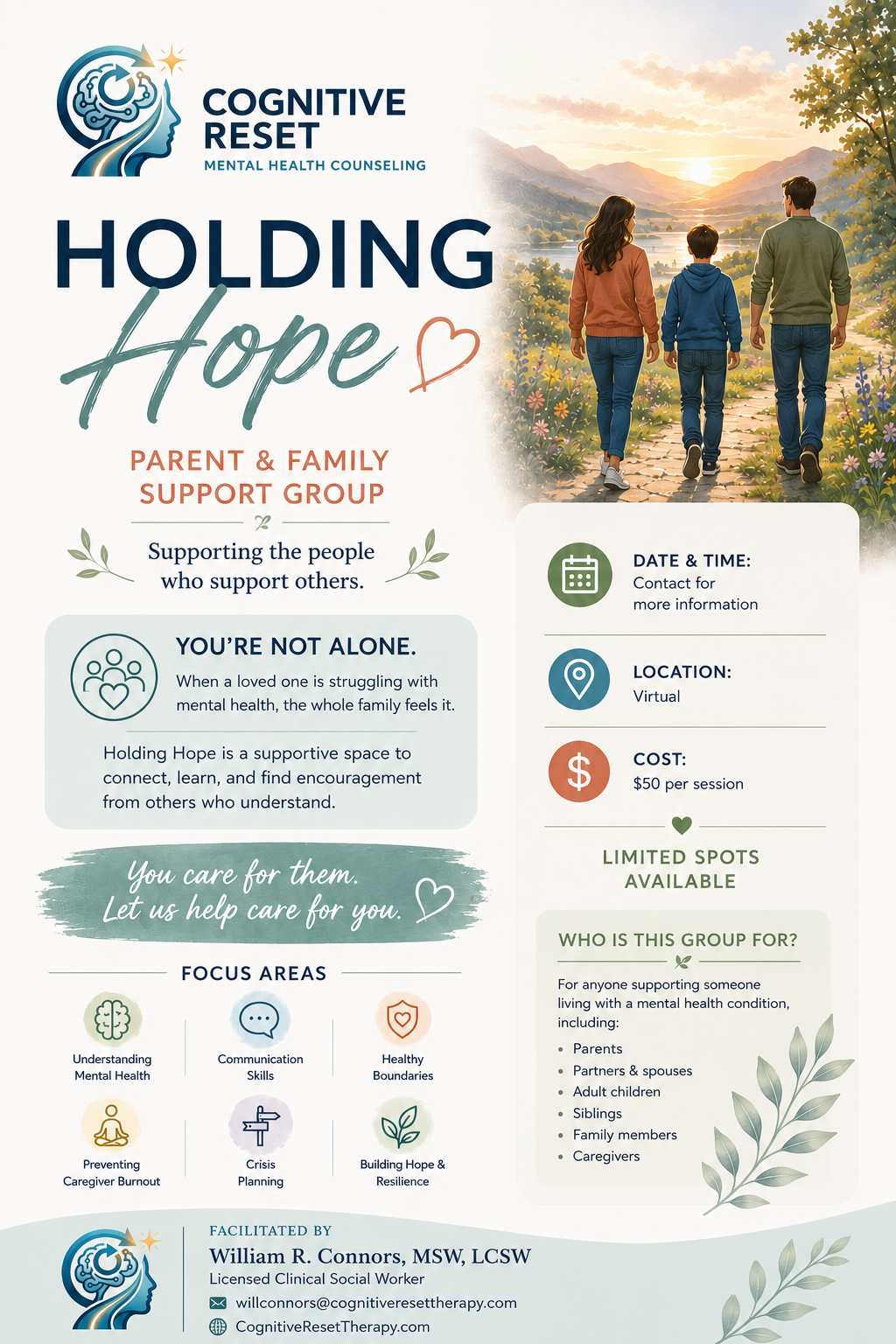
For parents, families, and caregivers
Supporting the people who support others.
A virtual support group for caregivers who need care, understanding, and practical support of their own. Holding Hope is for parents, partners, spouses, adult children, siblings, and other family members supporting someone living with a mental health condition.
Members can connect with others who understand while learning about communication, healthy boundaries, crisis planning, caregiver burnout, and ways to keep hope and resilience alive.
How it works
You do not need to know exactly what to say or which therapist to choose. Tell us a little about what you are looking for, and we will help with the rest.
Send a brief message. Do not include sensitive clinical details.
We will listen, answer your questions, and help you consider which therapist may be the best fit.
If our practice is the right level of support, we will help you schedule your first appointment and begin with a clear direction.
Fees & insurance
The same rates apply whether you work with Michael or William. Cognitive Reset Therapy is a private-pay, out-of-network practice, and payment is due at the time of service.
Out-of-network superbills are available. They are provided monthly, or earlier upon request. The benefits guide below explains what to ask your insurer and how to get started.
Why choose private pay?
Private pay offers greater control over insurance involvement and the freedom to choose care based on your needs and your connection with your therapist. Together, we can shape treatment around practical relief, deeper understanding, and your longer-term goals, without relying on insurance approval when you choose not to use your benefits.
You decide whether to submit your superbills for possible out-of-network reimbursement. Submitting a superbill shares treatment and diagnosis information with your insurer. If you choose not to seek reimbursement, no insurance claim needs to be submitted for your sessions.
If you want us to coordinate with a school or employer, we can discuss what information is needed and the authorization required to share it. You can ask about a focused summary or letter rather than sharing your full clinical record.
We still maintain confidential clinical records, and legal limits to confidentiality apply. Private pay does not remove any applicable professional or occupational reporting obligations. If privacy is a particular concern for you or your child, we welcome that conversation before treatment begins.
Use your out-of-network benefits
Cognitive Reset is a private-pay practice. If your plan includes out-of-network mental health benefits, you may be able to submit a superbill for possible reimbursement. We provide superbills monthly, or earlier upon request. Your insurance plan determines whether services are eligible and how much it will reimburse.
Call the Member Services number on your insurance card and ask about out-of-network outpatient mental health coverage.
We provide an itemized superbill each month. If you need one sooner, you may request it from the practice.
Follow your insurer's instructions for submitting an out-of-network claim, whether through its portal, app, or another method.
Questions to ask your insurer
If the representative asks for billing codes or provider information, contact us and we can supply the relevant details.
Short FAQ
A superbill is an itemized record of the services you received and paid for. It includes information an insurer may require when reviewing an out-of-network claim.
Superbills are provided monthly. You may request one earlier if you need it before the usual monthly schedule.
No. Eligibility, deductibles, allowed amounts, reimbursement rates, and claim requirements vary by plan. Your insurer makes the final coverage and reimbursement decision.
Ask the insurer to identify what is missing. If it relates to the superbill or provider information, contact Cognitive Reset so we can review the request.
Free 15-minute consultation
Reaching out can feel like a big step, especially if therapy has not helped before or you are unsure where to begin. Send us a brief message. One of us will listen to what you are looking for, answer your questions, and help you decide whether there is a good fit within our team.
Email is not a secure channel for emergencies or detailed health information. Please use the SimplePractice form for consultation requests.
Secure consultation request
Use our secure SimplePractice form to share your contact information, tell us who you are seeking support for, and let us know whether you have a therapist preference.
Open secure consultation formThe form opens in SimplePractice. Submitting an inquiry does not establish a therapist-client relationship.